Deprecated: strtolower(): Passing null to parameter #1 ($string) of type string is deprecated in /home/u105660309/domains/malaivelsiddhahospital.in/public_html/wp-content/plugins/taboola/simple_html_dom.php on line 712
Deprecated: strtolower(): Passing null to parameter #1 ($string) of type string is deprecated in /home/u105660309/domains/malaivelsiddhahospital.in/public_html/wp-content/plugins/taboola/simple_html_dom.php on line 712
Deprecated: strtolower(): Passing null to parameter #1 ($string) of type string is deprecated in /home/u105660309/domains/malaivelsiddhahospital.in/public_html/wp-content/plugins/taboola/simple_html_dom.php on line 712
Deprecated: strtolower(): Passing null to parameter #1 ($string) of type string is deprecated in /home/u105660309/domains/malaivelsiddhahospital.in/public_html/wp-content/plugins/taboola/simple_html_dom.php on line 712
A ration card serves as a crucial document for Indian families, enabling them to access food and essential commodities at subsidized rates through government distribution centers. This document proves particularly beneficial for economically disadvantaged and middle-class households. The year 2025 has witnessed significant governmental reforms regarding ration card regulations, with most procedures now transitioning to digital platforms and mandatory Aadhaar linking becoming a critical requirement.



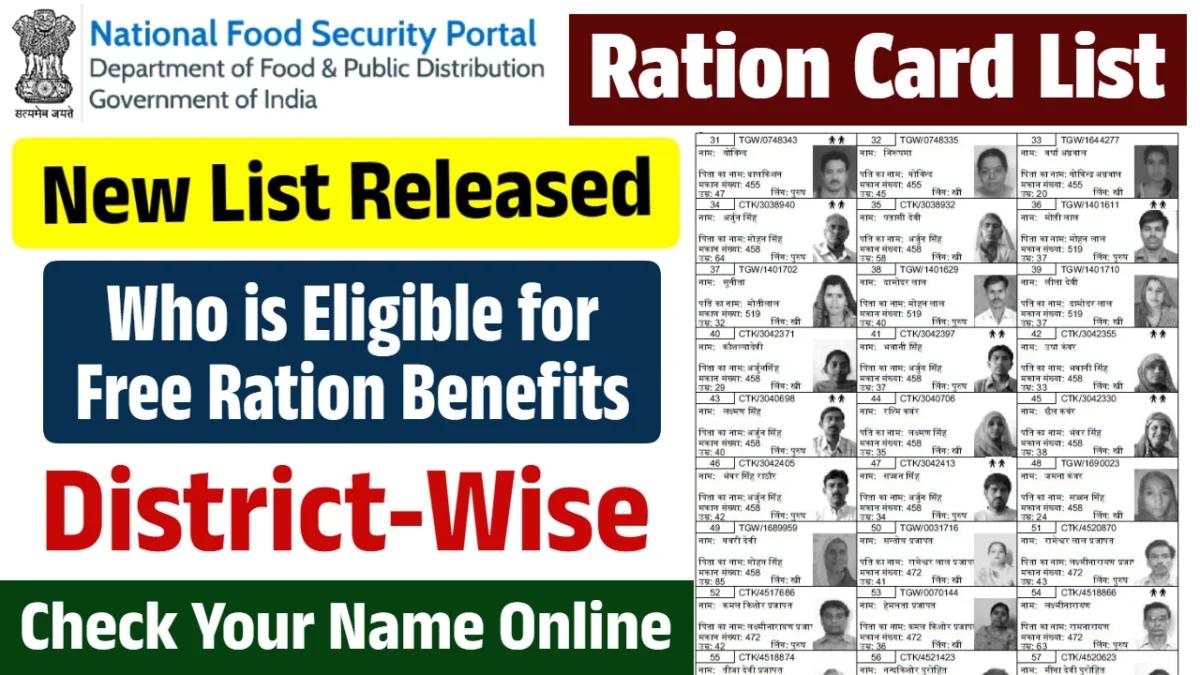
Beyond its primary function for food procurement, the ration card functions as official documentation for address verification and family income proof. Numerous governmental welfare programs utilize ration cards as eligibility criteria for benefit distribution. Due to the updated regulations in 2025, citizens must verify their inclusion in the revised “Ration Card List 2025” to ensure continued access to welfare benefits.
Ration Card List 2025
The current era marks a significant shift toward digital ration cards. Multiple states are implementing online databases, electronic Know Your Customer (e-KYC) processes, and compulsory Aadhaar integration. These measures effectively eliminate fraudulent cards while ensuring that only legitimate families receive governmental assistance.
Whether seeking a new ration card or updating existing documentation, understanding the current regulatory framework remains essential. This comprehensive guide covers all necessary information regarding ration cards in 2025.
Ration Card Beneficiary List 2025 Overview
Authority: Food and Civil Supplies Department
Article Topic: Ration Card List 2025
Country: India
Beneficiaries: Eligible households
Card Categories: APL, BPL, Antyodaya
Application Process: Online or offline
Update Frequency: Regular updates
Category: Latest News
Official Portal: https://nfsa.gov.in/
Significance of Ration Cards for Citizens
The ration card system provides multiple advantages for households:
- Enables families to purchase rice, wheat, sugar, and pulses at reduced prices from authorized government outlets
- Facilitates access to additional governmental programs including cooking gas subsidies (LPG) and healthcare initiatives
- Functions as legitimate proof of residence or income documentation for various governmental services
- The 2025 digitization initiative ensures genuine beneficiaries receive assistance while preventing system abuse
Categories of Ration Cards in India
Ration card classifications depend on household income and economic circumstances. The primary categories include:
- BPL (Below Poverty Line): Designed for economically disadvantaged families with enhanced benefit provisions
- APL (Above Poverty Line): Intended for higher-income households with reduced benefit allocations
- AAY (Antyodaya Anna Yojana): Specifically created for extremely impoverished families
- Priority Household/State-specific cards: Certain states maintain additional ration card categories
Qualification Requirements for Ration Card
Obtaining a ration card requires meeting specific criteria:
- Households below designated income thresholds qualify for BPL or AAY classifications
- Families exceeding income limits may obtain APL cards, subject to state-specific regulations
- Certain cards are allocated based on household size, property ownership, or social category
- The 2025 system implements rigorous verification of documentation, Aadhaar details, and income evidence to ensure only eligible families receive ration cards
Aadhaar Integration with Ration Cards: Its Significance
The year 2025 mandates Aadhaar linking with ration cards. This integration eliminates duplicate and fraudulent cards while ensuring each individual maintains only one valid card. This system enables the government to distribute food supplies and benefits to legitimate recipients securely.
Aadhaar connection can be completed through two methods: online via state ration card portals or through visits to local distribution offices. The system employs e-KYC and OTP verification to authenticate user identity. Failure to complete Aadhaar linking may result in ration card deactivation and loss of food and benefit access.
Updated Ration Card Regulations
- Mandatory Aadhaar integration for all families to maintain benefit eligibility
- Single card per household policy: Additional cards must be surrendered
- Digital transformation: Multiple states transitioning to online or smart card systems
- Online modification capabilities: Applications, member additions, and removals now possible digitally
Procedures for Adding or Removing Household Members
Household compositions evolve over time, necessitating corresponding ration card updates. Adding newborn children ensures their inclusion in food distribution and benefit programs. When family members relocate, marry, or pass away, their names require removal from the card. Maintaining current ration card information ensures uninterrupted governmental benefits and prevents administrative errors or misuse.
Adding members requires documentation such as birth certificates or Aadhaar cards. Removals may necessitate death certificates or relocation proof. The 2025 single-card-per-family policy makes accurate updates crucial. Regular ration card maintenance ensures proper benefit distribution among all eligible family members.
Locating Your Name in the Ration Card Database
- Access your state’s ration card portal using a smartphone or computer
- Locate the Ration Card List or Search Ration Card option on the homepage
- Select your specific district, city, or village from the provided menu for accurate results
- Enter your complete name or ration card number exactly as shown on official documentation
- Click the Search or Submit button to display your ration card information
- Review your complete ration card details including all registered family members and relevant information
- Download or print the information for future reference when needed
Frequently Asked Questions
Is Aadhaar linking necessary?
Yes, all family members must link Aadhaar with the ration card.
How to check my name in the list?
You can check online on your state’s PDS website or at local ration shops.
What if I do not link Aadhaar?
Your ration card benefits may be stopped.
What types of ration cards are available in 2025?
The main types include BPL (Below Poverty Line), APL (Above Poverty Line), AAY (Antyodaya Anna Yojana), and state-specific priority household cards, each offering different benefit levels based on family income and economic status.
